
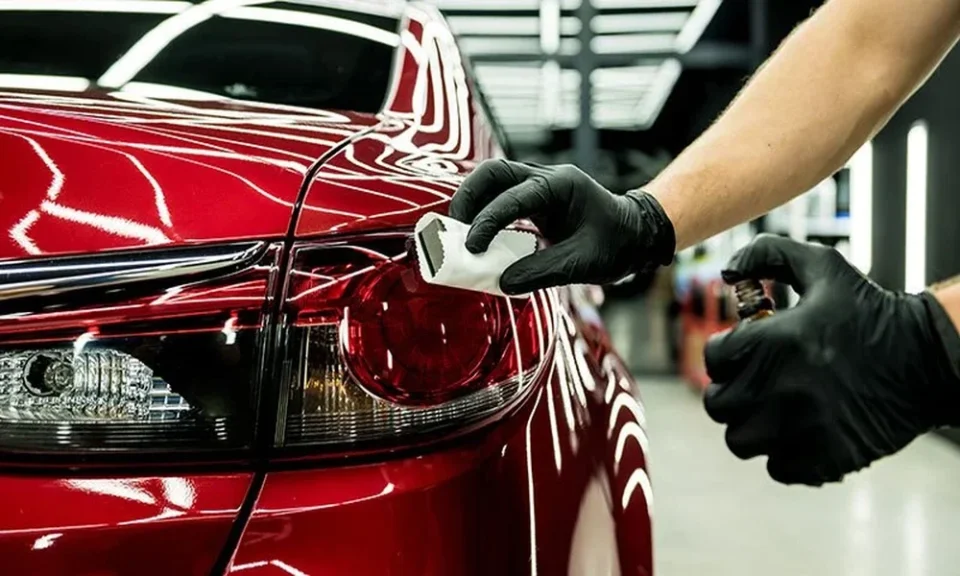
If you’ve spent any time browsing detailing forums or listening to shop owners talk shop, you’ve probably heard ceramic coating described as “permanent protection” or a finish that lasts “a lifetime.” It’s a nice pitch, but it isn’t quite how the chemistry works. Ceramic coating is durable, and a properly applied one will genuinely outlast wax and traditional sealants by years, not weeks. Still, it wears down gradually, the same way any protective layer exposed to sun, road grime, and repeated washing eventually does.
So the honest answer to “how long does it last” isn’t a single number. It’s a range that depends on the product, the prep work, and how the car is actually driven and cared for. Understanding those variables is more useful than memorizing a marketing claim.
What Ceramic Coating Actually Is
Most ceramic coatings are built around silicon dioxide (SiO2), suspended in a liquid carrier and applied by hand or machine to a vehicle’s clear coat. As the solvent evaporates and the product cures, those nanoparticles cross-link into a thin, glass-like film that bonds to the paint at a molecular level rather than just sitting on top of it, the way carnauba wax does.
Researchers studying nano-SiO2 coatings have found that even modest concentrations of these particles measurably increase surface hardness and push water contact angles well past 100 degrees, which is a technical way of describing the strong beading effect coated cars are known for.
That hardness and slickness are the whole point. A cured ceramic layer resists light chemical etching, sheds water and contaminants more easily, and adds a sacrificial barrier between the elements and your factory clear coat.
What it doesn’t do is make the paint bulletproof. It’s not a substitute for paint protection film against rock chips, and it isn’t immune to the slow chemical breakdown every coating eventually experiences.
So, How Long Does It Actually Last?
This is where the range widens quite a bit, mostly because “ceramic coating” gets used to describe products with very different levels of durability.
Consumer spray-on ceramic products, the kind sold in auto parts stores and applied at home, typically hold up for a few months to about a year. They’re easy to apply and genuinely improve gloss and water behavior, but the SiO2 concentration and cross-link density are lower than professional-grade formulas, so they wear off faster.
Mid-tier professional coatings, applied by a trained detailer after proper paint prep, generally last somewhere between two and three years under normal conditions.
Premium multi-layer coatings, often paired with graphene or ceramic-infused topcoats and applied in a controlled environment, can realistically protect a vehicle for five years or more, and some manufacturer-backed systems are rated even longer with proper maintenance.
Those numbers assume decent conditions and reasonable upkeep. A coated daily driver parked outside in Phoenix summers is going to age differently than the same coating on a garage-kept weekend car in a milder climate.
The Real Factors Behind Ceramic Coating Longevity
Surface prep matters more than the product label. Ceramic coating bonds to whatever is underneath it, so any embedded contamination, old wax residue, or unaddressed swirl marks get sealed in rather than fixed.
Shops that build proper paint correction and decontamination into their process, which is standard as part of a full ceramic coating installation, give the coating a clean, stable surface to bond to. Skip that step and even a premium product tends to underperform and wear unevenly.
UV exposure accelerates breakdown. Sunlight is one of the more aggressive forces acting on any automotive coating. Research on automotive clearcoat systems has shown that UV light absorbers built into paint and protective layers gradually degrade with sustained exposure, which is part of why cars that live outside in sunny climates tend to need coating renewal sooner than garage-kept vehicles.
Driving conditions and mileage play a role too. Highway driving kicks up more abrasive debris than short neighborhood trips, and vehicles that regularly encounter road salt, tree sap, or industrial fallout will see faster wear than ones that don’t.
Washing habits are underrated. Automatic car washes with abrasive brushes can thin a coating faster than hand washing with a pH-neutral soap and the two-bucket method. It’s also worth knowing that washing a car in the driveway sends detergent-laden runoff straight into storm drains, since that water typically isn’t treated before reaching local waterways.
The EPA has published guidance on vehicle washing practices for exactly this reason, and it’s a good argument for using a wash facility that captures and treats runoff, or at least washing on a permeable surface like grass or gravel when possible.
Signs Your Coating Is Wearing Thin
You don’t need lab equipment to tell when a ceramic coating is losing effectiveness. Watch for:
- Weaker water beading. Instead of tight, round beads, water starts sheeting or sitting flatter on the surface.
- Dulling gloss. The paint looks slightly hazy or less reflective, even after a wash.
- Contaminants sticking more. Bugs, tar, and water spots that used to wipe off easily start requiring more effort to remove.
- Reduced slickness. Running a hand over the paint, it feels less glass-smooth than it did right after application.
None of these show up overnight. They creep in gradually, which is why a lot of owners don’t notice until the protection is largely gone.
Getting More Years Out of the Coating
A few habits genuinely extend a coating’s useful life without much extra effort:
- Hand wash with pH-neutral, ceramic-safe soap rather than harsh degreasing detergents.
- Use the two-bucket method or a foam cannon to minimize the chance of dragging grit across the surface.
- Avoid automatic tunnel washes with stiff brushes when possible; touchless or soft-cloth washes are gentler.
- Apply a ceramic booster spray every few months to refresh hydrophobic properties between full applications.
- Park in shade or a garage when it’s practical, since reducing cumulative UV exposure slows the whole degradation process.
- Have the coating inspected periodically. Mobile detailing operators such as Cargo Detailing can usually tell from a quick water-beading test whether a coating is still performing or due for renewal.
None of this guarantees an exact expiration date, but consistent care reliably pushes a coating toward the longer end of its expected range rather than the shorter one.
Is It Worth It?
For most owners, yes, with realistic expectations. Ceramic coating won’t make a car maintenance-free, and it won’t outlast a poor prep job or years of neglect. What it does offer is a meaningfully longer protective window than wax, easier maintenance washes, and a finish that holds its gloss better over time.
The lifespan you actually get comes down to the quality of the application, the climate the car lives in, and whether basic care habits stick. Treat it as a long-term investment in the paint rather than a one-time miracle fix, and it tends to deliver exactly what it’s designed for.
