
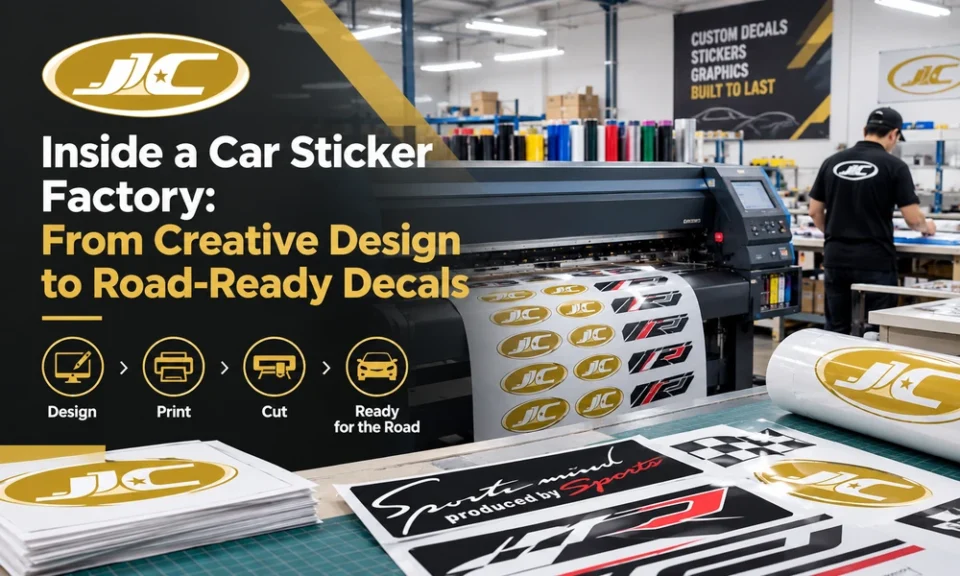
Car stickers are designed on a screen. It passes through several steps before entering a vehicle which dictate the color, shape, finish, and durability. Every detail counts at every step, regardless of whether your final product is a tiny logo for your daily driver or an entire batch of decals for the company fleet.
This brings these steps together under one roof, or within a connected production process at car sticker factory. It could be taking care of artwork verification, printing, trimming, quality control, and stuffing. Businesses, distributors, and vehicle owners can benefit with an understanding of this process because it clarifies how to select the right products when ordering.
One Design, Six Production Decisions
A complete sticker may appear rather unexceptional but it takes many decisions to create. This is how the journey of an order looks like from it being a thought until its completion.
The artwork is checked
It starts with the customer’s design. The production team then checks its size, colors, resolution, and shape. If the artwork has small text or fine lines, the team might recommend that you make adjustments to maintain a crisp print in your final product.
It is the stamp of the customer that initiation of printing shall only happen after approval of proof. This also helps prevent errors with logos, phone numbers, website addresses, and other important information.
The material is selected
Yet it highly depends, where are you supposed to use this sticker − so the right material. The materials used for exterior car decals need to be able to survive exposure to the elements. Window stickers need to be appropriate for both the glass surface and their location.
A car sticker factory may have vinyl in a range of colors, calipers, finishes, and adhesives. Instead of choosing appearance, buyers should ask which one suits their purpose.
The design is printed
Printing is the process of transforming the approved artwork into an actual product. The approach is based on the material, design, order volume, and equipment used.
It aims to create crisp text, sharp graphics, and uniform color. For bulk orders the factory ideally should use an agreed reference color or approved sample.
The sticker is cut
Others just have basic rectangle or circle stickers. Some repeat the contours of a logo, letter, or custom graphic.
Well-cut products are what can provide a neat edge and make the design appear both professional and extravagant. If you want lettering and/or shaped decals you need to cut the artwork as it was approved.
The product is checked
Stickers must be examined for printing errors, bad cuts, marks on the surface, and wrong dimensions before packing! Not just check at the end, large orders would require multi-point checks.
The order is packed
To protect the sticker from bending, scratches, exposure to moisture, etc., when storing or transporting, stickers should be packed. If you also provide clear labels, it will enable buyers to sort different designs and sizes post-delivery.
What Happens When the Order Becomes Bigger?
Having one sticker is not the same as having ten thousand stickers. With bigger orders, you must take care of your planning to make sure only the design, material, and finish differ.
A lot of computerized manufacturing plants also constrain jobs by material, color, size, or even production method. It helps to manage time as well to avoid wasting. The buyer also needs to verify the specifications before production.
In the case of a fleet branding project, for example, each sticker may require identical logo dimensions and color. In cases where the order comprises multiple designs, each design should be distinctly marked and each version including the count.
When you want to contact a car sticker factory, these messages shall be mentioned as early as possible:
- Total quantity and designs count
- Sticker dimensions and shapes
- Material and finish preferences
- Intended surface and use
- Required delivery date
- Packing and labelling needs
This helps with the ordering and allows for a more precise quote to be given by the production team.
Custom Work: Not Just Adding a Logo
Some purchasers require standard markings, whereas others prefer a product that is fabricated to order. Bespoke work can involve odd shapes, unique colors, printed patterns, reflective material, or repositionable adhesive.
The options depend on the equipment of the factory and what materials are used. Some designs might also require additional set up or slicing time.
To have a custom product made, inquire about size before you are likely to order from the factory if they would be able to provide the dimensions and finishing of the needed size. Make sure to verify artwork format, setup fees (if applicable), minimum order quantity, and sample process.
When you have stickers with logos of companies, keep a history about the artwork approved and colors used. This can facilitate easier reorders and aid in ensure a uniform brand identity.
Questions You Should Be Asking Before Purchase
While a factory website could feature pretty products, it should also describe how they make and service them.
Inquire on how does the factory inspect quality, what are the materials used, as well as if it could accommodate your order quantity. Verify the production, and inquire how it response with printing errors or damaged goods.
For repeat orders, query if the factory is able to replicate the same specs again. If the product is at your country, ensure its packing details and delivery cost − ask about shipping documents as well.
An effective supplier should delineate what it has to offer and any restrictions in moment detail. Do not depend on high-level statements regarding durability or print quality.
The Process is Made Simpler by the Right Factory
The work of a car sticker factory is not limited to printing. Method of its production, used materials cut accuracy, and quality checks influence the result.
Start with clear specifications, then approve a sample when needed to design custom decals for one car or a batch for starting happiness. Evaluate suppliers based on product quality, service, and total cost (not just price).
By good planning, the factory will be able to produce the correct stickers and increase your chances of getting reliable results on each order.
